A token of remembrance
It’s amazing how some incidents are etched in my memory through the simplest objects. Like an old radio, bringing back the memories of a 4 pm music show I’d listen to – out of my wish – after coming back from school. Or a wooden chair, reminding me of dadi while she’d sip tea around 4 pm on the porch. Or the parijaat flowers, that take me to the time dadi would pick and keep them on the shelf of our temple that’s full of grandeur. Or the shelf of the temple that, funnily enough, urges me to think of a birdhouse we used to keep there, back in the childhood.
How common is gender role reversal?
There is a woman I know who worked before her marriage. She left her job after marriage but wanted to work again. She tried to convince her new family that consisted of her husband and three other in-laws. The mother-in-law insisted that she can recommence job but she’d still be responsible for cooking for the family of five. They were not ready to have a professional cook. The woman joined a company and worked morning to evening. She’d cook before coming to the office and would repeat the same after going back home.
‘Normal is an illusion’
Before I raise a point, I want to ask you, who finalizes a major decision at your home? Is it your father, husband or brother? Why – Because they are elder, have more experience or simply because that’s the norm?
I almost never thought about this before, but a look-back shows me how normal it is to accept a male figure’s decision as something set in stone. Of course there have been times when my mother was against a step, but a nod from my father changed her decision. There have also been times when my mother convinced my father for something. But I want to ask – why are women given convincing power and not the power to make the final decision or to refute a statement?
Sanctum
I never enter here alone now. Along with me enter endless memories that make this place even more sacred to me. I always see you sitting in the corner sewing flowers into a garland, asking me to light a diya. I knew where you kept all your secret offerings, all the new clothes and prasad. I even remember the minutest detail, like how I could never light a matchstick because the matchbox was always covered with diya oil.
I don’t know if worshipping everyday for 10 years made me religious enough, but the most important thing I learnt from you is dedication – to the God, to your family.
Nostalgia: Part 2- Spring.
While most people have summers or winters as their favourite seasons, spring is equally admirable to me. An underrated, yet a beautiful time of the year, it is associated with colours. In summers you’ve yellow, sunny days. Winters are all about white and grey. Spring starts with yellow leaves, eventually transitioning trees to green, while I watch the orange flame-like flowers bloom under the blue sky.
Spring brings me memories of childhood. It’s the time of year when I used to have a short vacation before getting upgraded to the next class. I’d walk on the yellow path that the neem tree at my house adorned with its leaves. I’d also regularly observe if the mango tree bore any mangoes, because collecting raw mangoes was definitely one of my and my cousins’ favourite pass times. We have always been enthusiastic about plants, due to which we sowed numerous of them during the time. Before the vacation ended, we’d start preparing ourselves for the summer break. We’d take out our ludo and carrom boards after a year, and start having demo games to be skilled enough by the summer vacation.
Nostalgia: Part 1- Durgashtami
As I sit with a cup of tea on my balcony, I realize it’s my favourite time of the year. With my birthday and Diwali approaching I could sense the festivity in the air, except that this air isn’t something I’m familiar with. I’m habitual of a much higher frequency oscillating in the air, the frequency of the enchanting music playing in durga pandaals in every nook. That’s the difference between a metropolitan and a town. The euphony fades in the noisy, busy city. But it persists in a town in different forms.
Routine
An old weighing scale, probably rusted; a mat; notebooks and pencil: That’s what she carries everyday when she leaves home for school at 8 in the morning. As the school bell rings at 2 in the afternoon, all the kids run towards the gate barging each other. She is calm. She wouldn’t run. She has a brunt on her shoulder; not of the weighing scale but of her siblings, her senescent mother. So she can’t afford even a single scratch on the scale lest she falls. She marches to the same spot she’s been sitting on for last 4 months, earning whatever she could with that old machine. She sits on the mat she brings with her and keeps the weighing scale in front of her. Her elder brother sells balloons. At 9 in the night he picks her up and both of them return home.
भाषा: Language
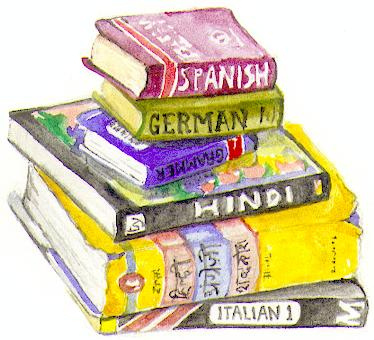
“When people fall into servitude, so long as they cling to their language, it is as they held the key to their prison.” I remember the quote from the story, ’The last lesson’ by Alphonse Daudet from my class 12th English textbook. It says, the only nexus that binds the people together when they’re slaves to a colony is their language. I relate to it as I’ve gone through the Indian history texts- slogans by our leaders, writings by Indian authors have remained the subjects of our study. From freedom fighters to our Prime Minister, everyone has been trying to endorse our native language, Hindi, to bind the country and to use it as an antidote against any external threat.
Kharab Chai
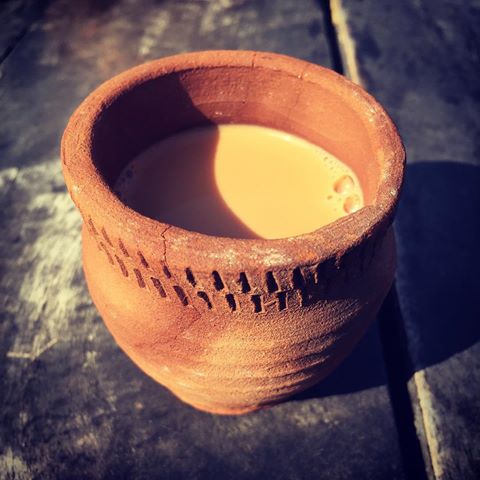
We’ve seen sellers fighting to be the best in the competitive market, trying to serve the best of products and services at customers’ disposal. But how many of you have observed sellers trying to sell the worst?
Years back I was traveling by a train to the holy city of Varanasi. We had entered the borders of Uttar Pradesh and I started observing vendors selling different specialties of their cities. While some offered the famous ‘Agra petha’ others resorted to tea/coffee. Needless to say that Indians, who start their day with tea, wouldn’t deny for a sip or two. Myriad of sellers came to offer tea claiming to be the best. Some accepted the offer, some didn’t.
TO BE AN ICONOCLAST
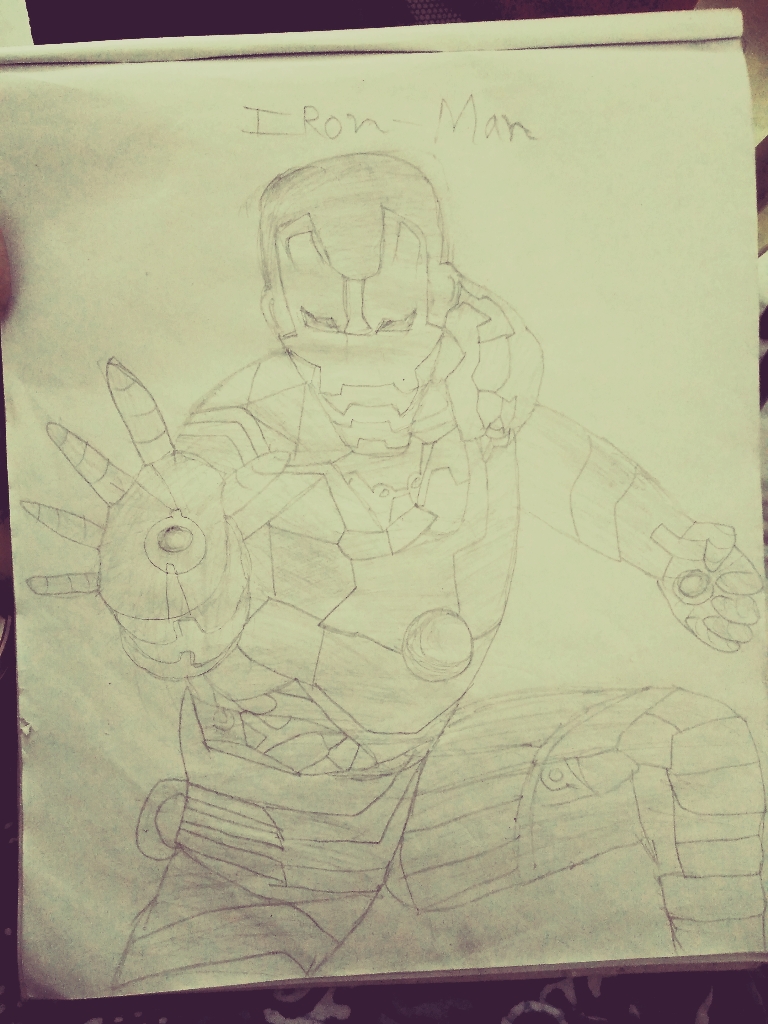
My periodic meetings with the pupils have let me observe certain similarities amongst them. Everyone seems to have a yearning for art in some way or the other. In the refreshment time everyone would go and fetch colours of their choice and start drawing their imaginations: some would draw houses, some would trace silhouettes on the paper, but some are consummate sketchers. Ankit is one of them. The sketch I’ve shared is his magnum opus-The Ironman. I asked him where he took help from, to which he replied he drew it on his own without looking at any pictures. At the first instance nobody would believe him, neither did I. It was then when he drew a sketch of doraemon in a jiffy that left me awestruck. By doing so he defied the belief that children from marginal family groups can only make good workers. I sensed a scintilla of iconoclasm. Do you sense the same?